
Introduction
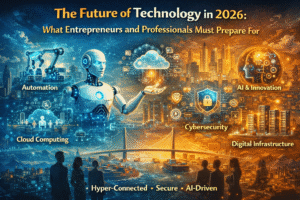
Technology in 2026 is not just evolving — it is redefining how businesses operate, compete, and grow. From automation to cloud computing, cybersecurity, and data intelligence, technology has become the backbone of every successful organization.
For entrepreneurs and professionals, staying updated with technology trends is no longer optional. It is essential for survival and long-term growth.
🚀 The Rise of Intelligent Automation
Automation tools are transforming industries by streamlining workflows and reducing manual effort.
Businesses use automation to:
Improve efficiency
Reduce operational costs
Analyze large datasets
Enhance customer service
Automation does not replace people — it enhances productivity. Professionals who understand automation tools are becoming increasingly valuable.
☁️ Cloud Computing as a Growth Engine
Cloud technology is now the foundation of digital transformation.
Key Benefits
Lower infrastructure costs
Remote accessibility
Better scalability
Enhanced data security
Startups and enterprises use cloud platforms to expand quickly without heavy capital investment.
🔐 Cybersecurity as a Business Priority
With rising digital adoption, cybersecurity threats have increased significantly.
Businesses must invest in:
Secure networks
Data encryption
Compliance frameworks
Employee cybersecurity awareness
Cybersecurity is no longer just an IT function — it is a core business strategy.
📊 Data-Driven Decision Making
Modern businesses rely on real-time data to guide decisions.
Data analytics helps:
Optimize marketing strategies
Improve supply chains
Enhance customer experience
Increase profitability
Professionals who can interpret data gain a major leadership advantage.
🌍 Technology and Global Competitiveness
Technology enables:
Remote team collaboration
Cross-border service delivery
Digital exports
Global client acquisition
Indian companies are increasingly competing on a global stage through tech-enabled strategies.
Challenges in the Tech-Driven Era
While opportunities are massive, challenges include:
Skill gaps
Rapid technology changes
Continuous upskilling requirements
High global competition
Adaptability and learning are now essential career skills.
Conclusion
Technology in 2026 is not just about innovation — it is about integration.
Businesses and professionals who adapt strategically will lead the future.
The real question is not whether technology will impact you.
The real question is: Are you ready to evolve with it?