
Introduction
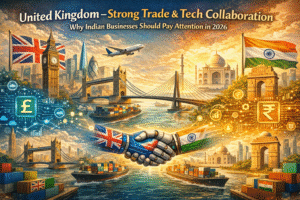
In 2026, the relationship between India and the United Kingdom is entering a powerful new phase. Beyond historical ties, the partnership is now driven by trade expansion, technology collaboration, fintech innovation, and startup investments.
For Indian entrepreneurs and professionals, the UK is not just another foreign market — it is a strategic gateway to Europe and global finance.
Why the United Kingdom Matters for Indian Businesses
The UK remains one of the world’s most influential business and innovation hubs.
Key Advantages
English-speaking business environment
Strong legal and regulatory framework
One of the world’s top financial centers (London)
High demand for digital transformation
A large and well-connected Indian diaspora
London continues to attract global investors, fintech startups, and technology companies.
Growing India–UK Trade Relations
India and the UK are strengthening economic cooperation through trade negotiations and bilateral agreements.
Key focus areas include:
Technology & Digital Services
FinTech & Financial Services
Green Energy & Sustainability
Education & Skill Development
Advanced Manufacturing
Indian IT and consulting firms already have a strong presence, but opportunities are rapidly expanding into newer sectors.
Technology & FinTech Collaboration
The UK is a global leader in fintech innovation. Cities like London serve as major fintech ecosystems.
Indian startups working in:
SaaS
AI-driven analytics
Digital payments
Cybersecurity
Cloud services
can find strong customer demand and partnership opportunities in the UK.
The combination of Indian tech talent and UK financial infrastructure creates powerful synergies.
Investment & Startup Ecosystem
The UK has an active venture capital ecosystem that supports globally scalable startups.
Indian founders entering the UK market benefit from:
Higher valuation potential
Access to international investors
Global brand credibility
Strong governance exposure
For European expansion, the UK often acts as the first entry point.
Challenges to Consider
Despite strong opportunities, businesses must prepare for:
Regulatory and compliance requirements
Taxation differences
Intense competition
Local partnership expectations
Success requires proper research, legal alignment, and localized branding strategies.
Conclusion
In 2026, the United Kingdom stands as a powerful partner for Indian businesses aiming to scale globally.
The India–UK corridor is no longer just about outsourcing — it is about innovation, collaboration, and shared global ambition.