Introduction
In today’s hyper-connected and fast-paced world, being busy is often mistaken for being successful. Long working hours, packed schedules, and constant multitasking are worn like badges of honor. But despite working harder than ever, many people feel mentally exhausted, unfocused, and unfulfilled.
This raises an important question: Is constant busyness actually reducing our productivity instead of improving it?
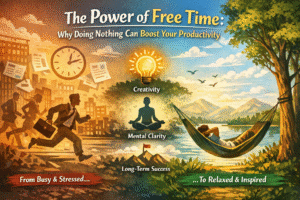
Free time is commonly misunderstood as laziness or wasted time. In reality, it is one of the most valuable resources for mental clarity, creativity, and sustainable success. When used intentionally, free time acts as a reset button for the mind, helping individuals perform better both personally and professionally.
Understanding the true power of free time can completely transform the way you work, think, and live.
Why Free Time Is Essential for Mental Health
The human brain is not designed to operate continuously without rest. Just like muscles need recovery after physical effort, the mind requires downtime to function efficiently.
Without proper rest, mental overload begins to show through:
Chronic stress
Anxiety and overthinking
Emotional imbalance
Decreased motivation
Burnout
Free time allows your brain to slow down, process information, and recover from constant stimulation.
Key Mental Health Benefits of Free Time
Reduced Stress Levels
Time away from responsibilities lowers cortisol levels, helping the body relax naturally.Improved Focus and Concentration
A rested mind can focus deeper and for longer periods without mental fatigue.Better Emotional Balance
Free time helps regulate emotions, making you calmer and more patient.Increased Creativity
Creativity thrives when the mind is relaxed and free from pressure.Stronger Decision-Making Ability
Mental clarity leads to smarter, more confident decisions.
When your mind is given space to breathe, it doesn’t slow down — it sharpens.
Real Free Time vs Digital Distraction
Many people believe scrolling social media, watching endless videos, or checking notifications is a form of relaxation. However, this type of activity keeps the brain in a constant state of stimulation.
Digital overload:
Reduces attention span
Increases anxiety
Disrupts sleep cycles
Decreases deep thinking ability
What Real Free Time Looks Like
True free time involves activities that calm the nervous system rather than overstimulate it:
Spending time offline
Taking slow, mindful walks
Reading physical books
Journaling thoughts and reflections
Practicing mindfulness or meditation
Sitting quietly without external input
Real rest restores energy. Digital distraction silently drains it.
How Free Time Directly Improves Productivity
It may sound counterintuitive, but working non-stop often leads to lower output and poor-quality work. Research and real-world experience show that people who intentionally schedule breaks outperform those who don’t.
When You Allow Free Time:
Creativity Increases
Breaks allow ideas to form subconsciously.Problem-Solving Improves
Stepping away from problems often leads to clearer solutions.Decision Quality Improves
Rested minds make rational, thoughtful decisions.Burnout Is Prevented
Sustainable productivity comes from balance, not exhaustion.
Many successful entrepreneurs, leaders, and thinkers credit reflection and downtime as key contributors to their success.
Practical Ways to Use Free Time Effectively
You don’t need a long vacation or drastic lifestyle changes. Small, consistent habits can create powerful results.
Simple Yet Powerful Practices
Keep 30 minutes daily without phone usage
Take one slow, mindful walk per week
Journal your thoughts once a week
Practice deep breathing or meditation for 10 minutes daily
Spend one full evening per week completely offline
These habits gradually improve mental clarity, emotional stability, and long-term focus.
Long-Term Impact of Valuing Free Time
When free time becomes a priority:
Work quality improves
Stress levels reduce
Personal relationships strengthen
Confidence increases
Life feels more balanced and meaningful
Free time is not about doing nothing — it’s about recharging for everything.
Conclusion
Free time is not wasted time.
It is investment time.
In a world that constantly pressures you to do more, achieve more, and move faster, sometimes the most intelligent decision is to pause. Slowing down allows you to move forward with clarity, focus, and confidence.
If you truly want long-term productivity, better mental health, and sustainable success, start valuing your free time today.