
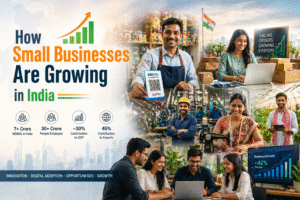
 A few years ago, Ramesh — a small tea stall owner in a Tier-2 city — was struggling to survive. His daily income barely covered expenses.
Today, he runs three outlets, accepts digital payments, and earns more than ₹1 lakh/month.
Sounds like a movie story?
It’s not.
👉 This is the real story of India’s small business revolution.
In 2026, small businesses (MSMEs) are not just surviving — they are driving India’s economy. With 7.8+ crore enterprises, this sector is growing faster than ever.
🇮🇳 The Backbone of India’s Economy
Small businesses are not “small” in impact.
- Contribute ~31% to India’s GDP
- Provide employment to 32+ crore people
- Represent 90%+ of global businesses
👉 That means:
Every second job in India is connected to a small business.
📖 The Story: From Struggle to Growth
Let’s go back to Ramesh.
🚫 Before:
- Only cash payments
- No marketing
- Limited customers
🚀 What Changed?
💳 Step 1: Digital Payments (UPI)
He started accepting:
- PhonePe
- Google Pay
👉 Result: Faster payments + more customers
📱 Step 2: Online Presence
His nephew created:
- Instagram page
- Google Business listing
👉 Result: Customers started discovering him online
🤖 Step 3: Smart Tools
He started using:
- WhatsApp for orders
- Basic accounting apps
👉 Result: Better management + higher profits
📈 Step 4: Expansion
Within 2 years:
- Opened 3 outlets
- Hired staff
- Built a brand
👉 This is not just Ramesh’s story…
👉 This is happening across India
🚀 Why Small Businesses Are Growing Fast in India
1. 💻 Digital Revolution
India’s growth is powered by:
- Smartphones
- Internet access
- UPI payments
👉 Businesses are becoming digital-first
2. 🧠 Technology & AI Adoption
Even small businesses are using:
- AI tools
- Automation
- Digital marketing
👉 Benefits:
- Save time
- Reduce costs
- Increase efficiency
3. 🏛️ Government Support
Key initiatives:
- Startup India
- MSME schemes
- Easy loan access
👉 These programs make starting a business easier than ever.
4. 🌆 Rise of Tier-2 & Tier-3 Cities
Growth is shifting beyond metros.
- Lower operational costs
- Increasing demand
- Less competition
👉 Smaller cities are becoming business hubs.
5. 💳 Easy Access to Funding
- MSME lending crossed ₹36+ lakh crore
- Credit availability increasing
👉 More funding = more growth opportunities
📊 Real Growth Numbers (2026 Reality)
- 8+ crore MSMEs registered in India
- ~48% contribution to exports
- Millions of new businesses every year
👉 India is becoming a business-driven economy
💡 Opportunities for New Entrepreneurs
If you’re planning to start a business — this is the perfect time.
🔥 High-Growth Sectors:
- Digital services
- E-commerce
- AI-based services
- Local service businesses
👉 These industries are booming due to changing consumer behavior.
⚠️ Challenges Small Businesses Still Face
Despite growth, challenges exist:
❌ Rising costs
❌ Global competition
❌ Skill gaps
❌ Lack of awareness
👉 Success depends on adaptability
🧠 Key Lessons from India’s Business Growth
From Ramesh’s story:
✔ Start small, think big
✔ Use digital tools
✔ Focus on customer experience
✔ Adapt to technology
👉 Growth is not about money…
👉 It’s about mindset