
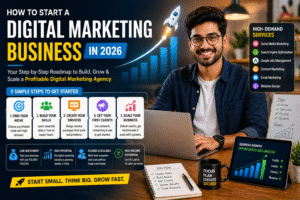
 In 2026, every business — from a local shop to a global brand — is competing online.
Before buying anything, people:
- Search on Google
- Check Instagram
- Watch YouTube reviews
👉 If your business is not online, it almost doesn’t exist.
That’s why digital marketing is no longer optional — it’s the backbone of modern business growth.
👉 Opportunity:
You can start your own digital marketing business with low investment and high income potential.
💻 What is a Digital Marketing Business?
A digital marketing business helps companies:
- Get customers online
- Increase visibility
- Generate leads and sales
📦 Services Include:
- SEO (Search Engine Optimization)
- Social Media Marketing
- Paid Ads (Google / Meta)
- Content Marketing
👉 In simple words:
You help businesses grow online — and they pay you for results.
🚀 Step-by-Step Strategy to Start
1. 🎯 Choose Your Niche (Most Important)
Don’t try to target everyone.
🔥 Example Niches:
- Real estate marketing
- Local businesses (salons, gyms)
- E-commerce brands
- Coaches / influencers
👉 Focused agencies grow faster and attract better clients.
2. 🧠 Learn One Skill First
❌ Don’t try to learn everything at once
✅ Start with one:
- SEO
- Social media marketing
- Paid ads
👉 Mastery comes step-by-step.
3. 🛠️ Build Your Online Presence
Create:
- A portfolio website
- Instagram page
- LinkedIn profile
👉 Your brand should look professional.
4. 📦 Define Your Services
Don’t sell “work” — sell results.
💡 Example Packages:
- “Get 50 leads/month”
- “Grow Instagram page”
- “Rank on Google in 3 months”
👉 Clients pay for outcomes, not effort.
5. 💰 Pricing Strategy
Beginner: ₹5,000 – ₹15,000/month
Intermediate: ₹20,000 – ₹50,000/month
Advanced: ₹1,00,000+/month
👉 Start small → increase pricing with results.
6. 📣 Get Your First Clients
Proven Methods:
- Instagram outreach
- LinkedIn networking
- Freelancing platforms
- Visiting local businesses
👉 Offer:
- Free audit
- Trial service
7. 📈 Scale Your Business
Once you get 3–5 clients:
- Create SOPs (systems)
- Automate work
- Hire freelancers
👉 Scaling comes from systems, not just effort.
📊 Core Digital Marketing Strategy (2026 Model)
🔥 1. SEO (Organic Growth)
- Rank on Google
- Get free traffic
- Long-term results
📱 2. Social Media Marketing
- Instagram Reels
- YouTube Shorts
- Personal branding
💸 3. Paid Advertising
- Google Ads
- Meta Ads
👉 Fastest way to generate leads
📧 4. Lead Generation Funnel
Flow:
Traffic → Landing Page → Leads → Sales
👉 Conversion optimization is key.
🤖 5. AI in Digital Marketing
AI helps with:
- Content creation
- Ad optimization
- Customer insights
👉 Modern marketing = AI + data
💡 Why This Business is Powerful
🚀 Low Investment
Only need:
- Laptop
- Internet
- Skills
🌍 Global Clients
Work with:
- India
- US
- UK
- Anywhere
📈 Recurring Income
Monthly retainers = stable income
⚡ High Demand
Every business needs marketing
⚠️ Common Mistakes to Avoid
❌ No niche selection
❌ Inconsistency
❌ Overlearning, no action
❌ Ignoring client results
👉 Biggest mistake:
Learning without implementation
🧠 Real-Life Example
A student starts:
- Learns Instagram marketing
- Handles 1 local gym
👉 Earns ₹5,000/month
After 6 months:
- 5 clients
- ₹50,000/month
After 1 year:
- Agency + team
- ₹2,00,000/month
👉 That’s how agencies grow.
🏆 SEO Tips for This Blog
✔ On-Page SEO:
- Use keywords in title
- Use keyword in first paragraph
- Add structured headings
✔ Content SEO:
- Add real examples
- Include data
- Write long-form content
👉 Consistency + value = ranking
🔥 Conclusion
Starting a digital marketing business in 2026 is one of the best low-investment opportunities.
You don’t need:
- Big office
- Huge investment
- Degree
👉 You only need:
✔ Skills
✔ Consistency
✔ Action
⚡ Final Thought
In today’s world:
👉 Businesses that understand digital marketing grow
👉 Businesses that ignore it disappear
So the real question is: